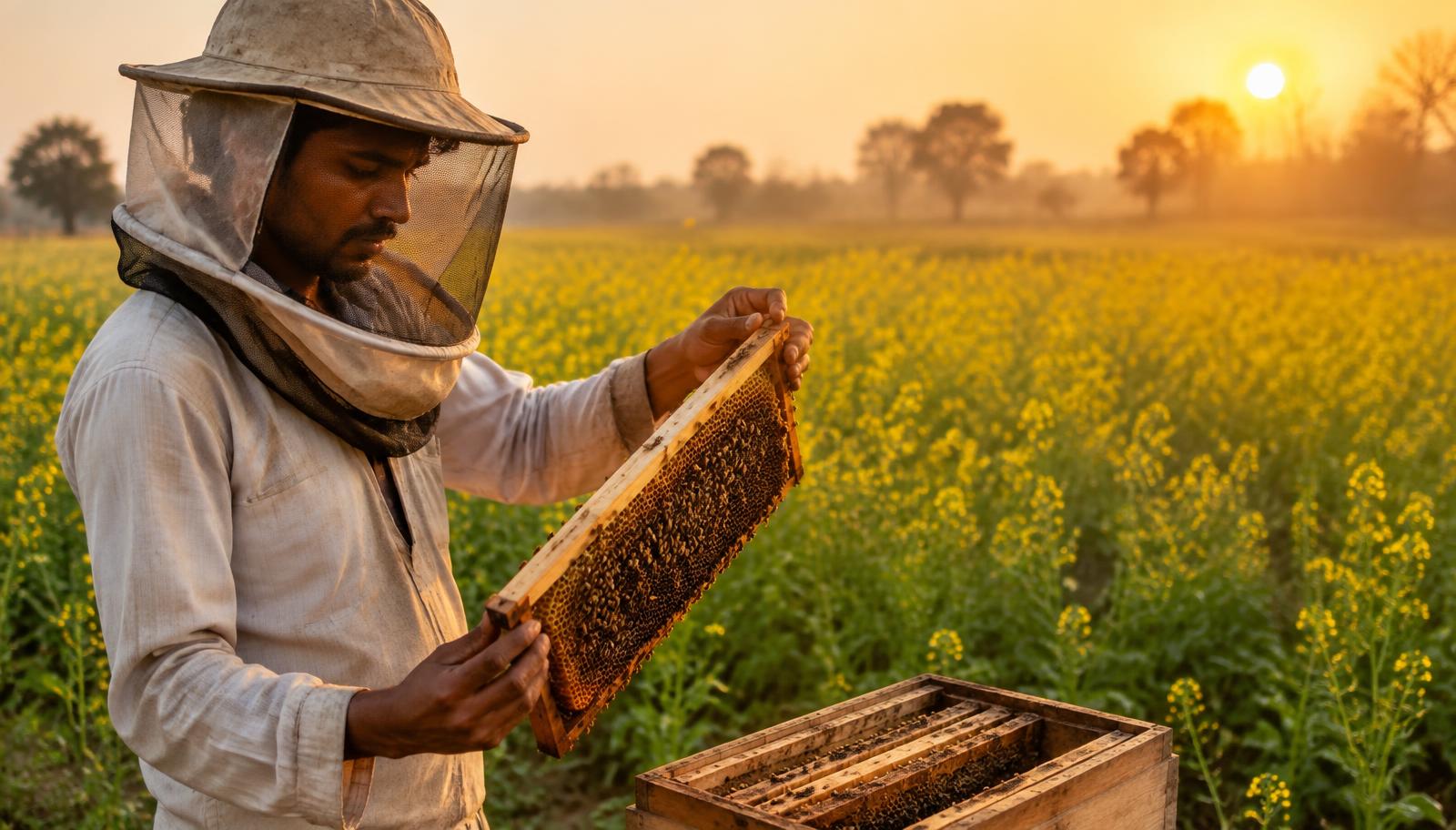
From hive to harvest: beekeeping for oilseed clusters
This handbook follows the official 7-Day Beekeeping Syllabus under the NBHM Scheme, integrated with oilseed production cluster benefits. Work through one day at a time. Each day ends with a multiple-choice quiz.
How to use this course
Read the lesson. Cover theory, field notes, and tables before attempting the quiz.
Attempt the quiz closed-book first. Passing mark is 70% (7 of 10).
Check the answer key. Review missed items, then revisit the matching section.
Score 70% overall across all 7 days to earn your certificate.
Introduction to Beekeeping & Oilseed Linkages
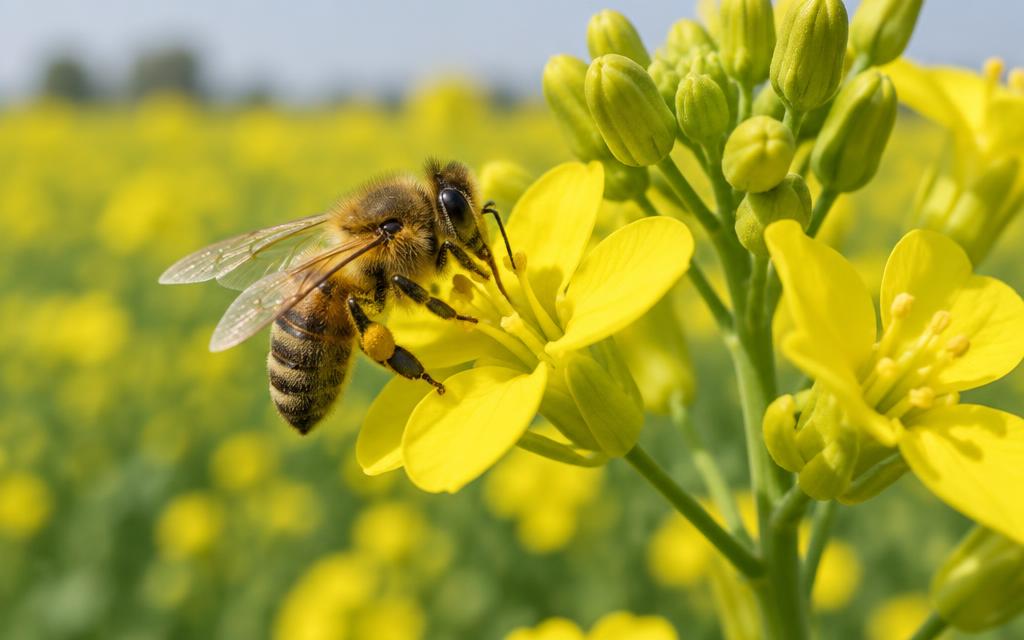
Beekeeping is both a livelihood and a pollination service. In oilseed clusters it raises yield, seed quality and farm income at the same time.
Open lesson and quiz →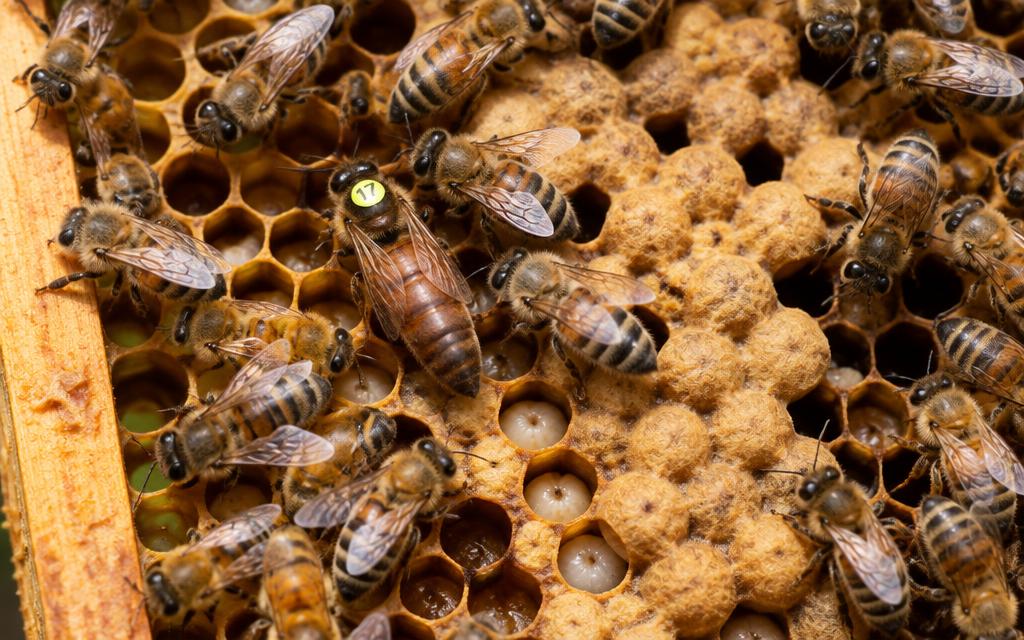
Bee Biology & Colony Organization
A colony is one super-organism. If you can read brood, stores and bee behaviour, you can time colonies to oilseed bloom.
Open lesson and quiz →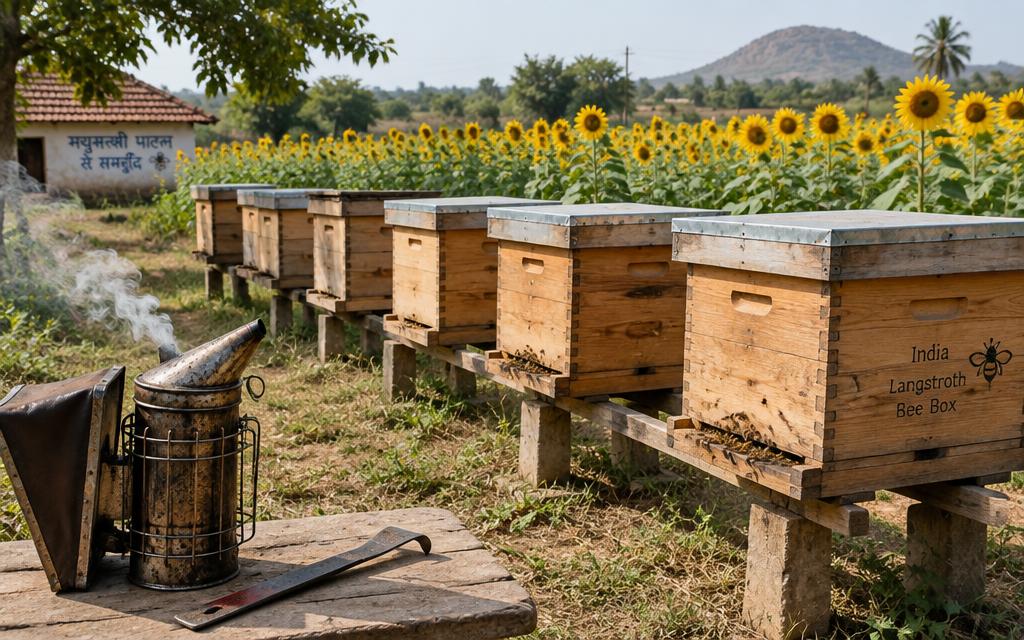
Beekeeping Equipment & Apiary Establishment
Standard boxes and a well-chosen site decide whether colonies work oilseed fields or waste energy, overheat, or get robbed.
Open lesson and quiz →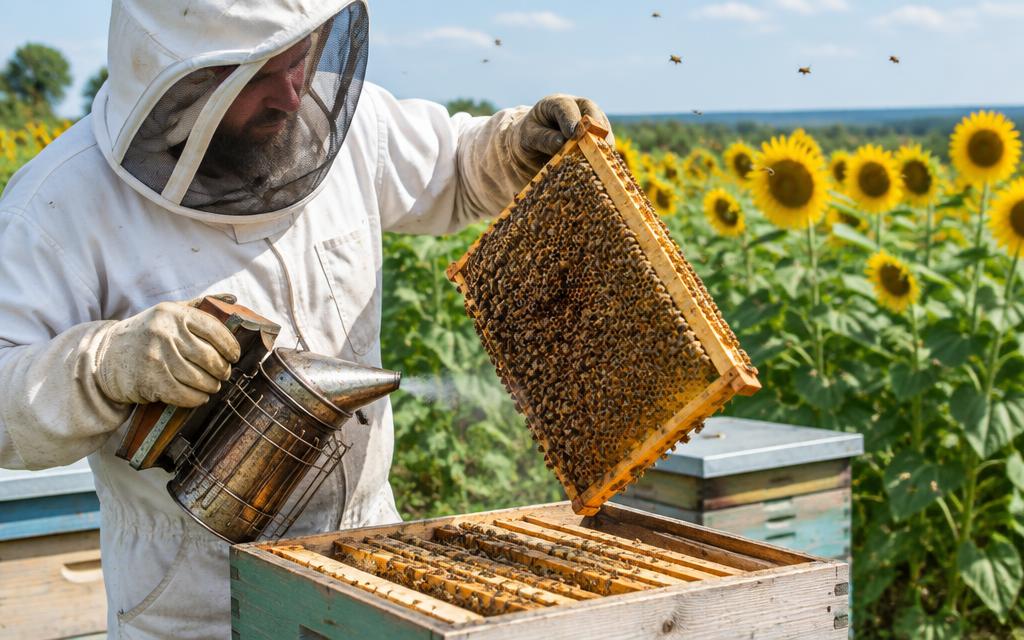
Colony Management & Oilseed Crop Pollination
Inspect with a purpose, feed only in dearth, and put the right number of strong colonies into the field at first bloom — never during a spray.
Open lesson and quiz →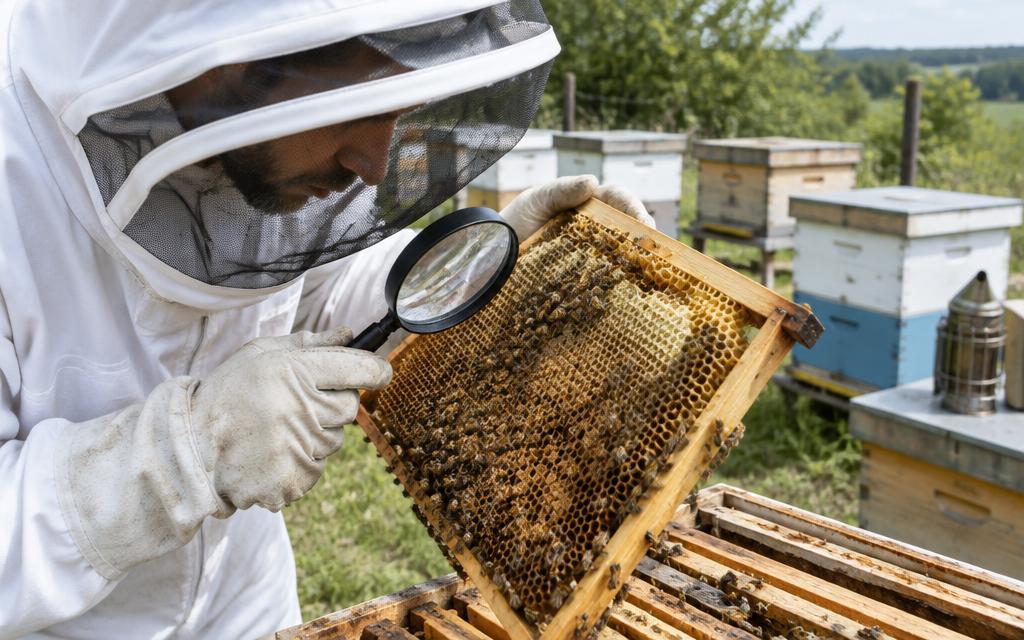
Bee Diseases, Pests & Natural Enemies
Healthy colonies pollinate. Learn to spot Thai sac brood, Nosema and chalk brood, keep wax moth and mites down, and make the oilseed cluster safe for bees.
Open lesson and quiz →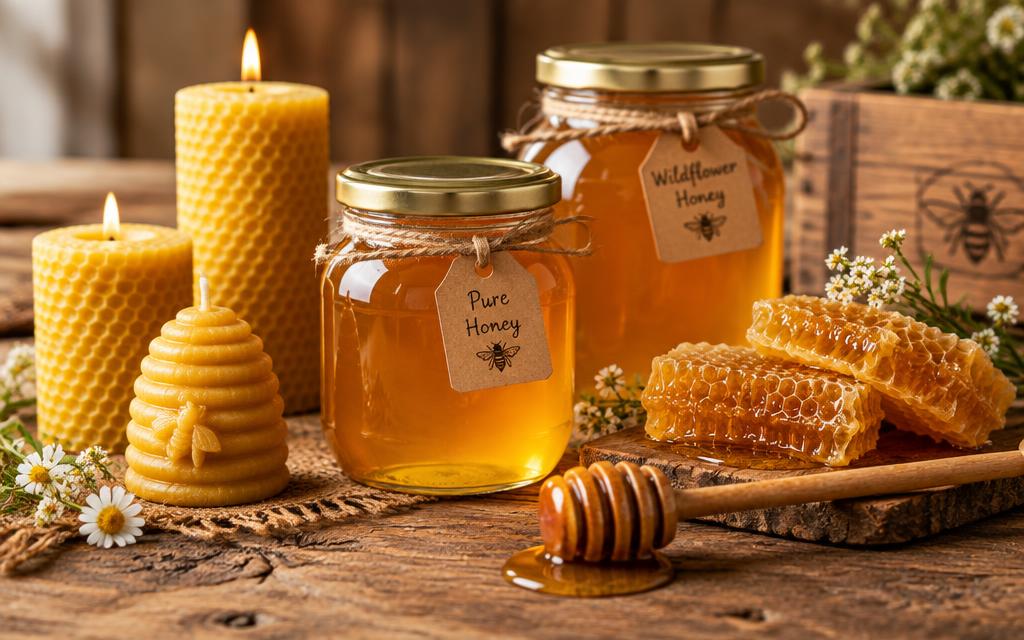
Honey, Wax & Value-Added Products
Oilseed bloom pays twice: seed in the field and honey in the super. Handle both like food. Quality, not just kilos, sets the price.
Open lesson and quiz →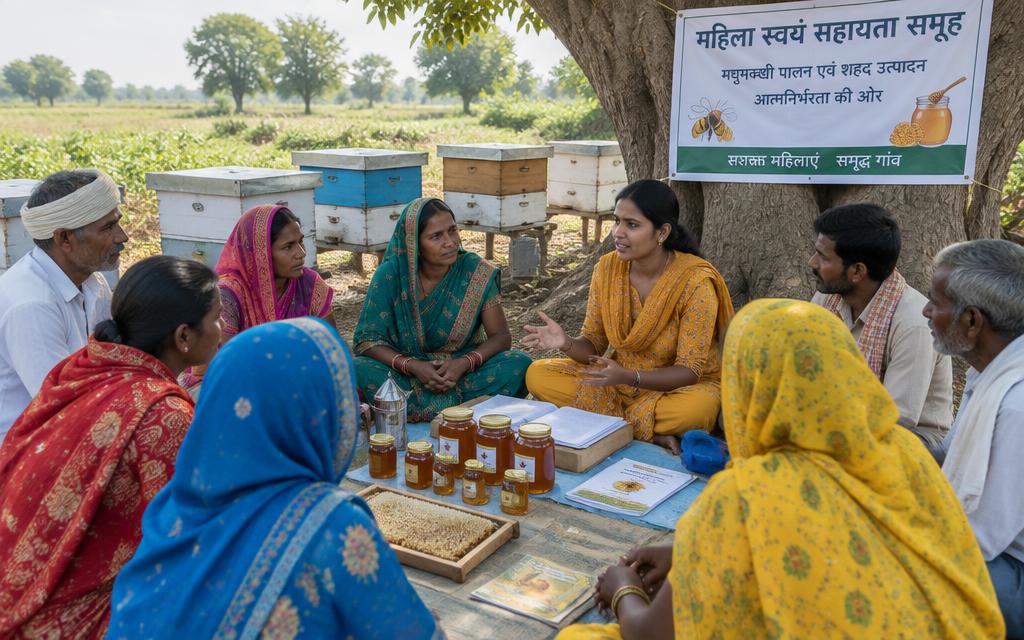
Economics, Schemes & Cluster-Based Benefits
A small unit pays when colonies are strong, honey is clean, and pollination is billed. Use NBHM, FPO/SHG platforms and oilseed cluster convergence; do not depend on subsidy alone.
Open lesson and quiz →Daily pattern
- Classroom briefing (60-90 minutes)
- Demonstration or field practice
- Reading of this handbook section
- 10-question multiple-choice quiz
- Answer key review and trainer debrief
Safety first
- Wear veil, gloves and light-coloured clothing.
- Know allergy / sting first-aid before hive work.
- Never open hives during pesticide spraying.
- Keep smokers lit and water nearby.